Navigating the world of senior care can feel like a labyrinth, especially when you start to consider the financial aspects. It is a significant life decision, one that involves not just emotional considerations but also careful financial planning to ensure comfort and stability for your loved ones, or for yourself. Many families find themselves grappling with questions about costs, services, and how to make the numbers work without sacrificing quality of life.
This is where a solid financial roadmap becomes invaluable. Having a clear understanding of potential expenses and income streams can alleviate much of the stress associated with this transition. That is why creating an assisted living facility budget template is not just helpful, it is essential for making informed choices and maintaining peace of mind during what can be a challenging time.
We are here to help you break down the complexities, providing a practical guide to understanding and managing the costs associated with assisted living. By the end of this article, you will have a much clearer picture of what goes into an assisted living budget and how to personalize one for your specific situation.
Understanding the Core Components of an Assisted Living Budget
When you first start looking into assisted living, it is easy to assume there is just one standard monthly fee. However, the reality is often more nuanced, with a range of services that can significantly impact the final cost. Most facilities operate on a tiered pricing model or an à la carte system, meaning the total cost is a combination of a base rate and additional services tailored to an individual’s specific needs. It is crucial to look beyond the initial quoted price to grasp the full financial commitment.
The base monthly rate typically covers the resident’s living space, which could be a studio apartment, a one-bedroom, or even a shared suite. This rate usually includes utilities, basic housekeeping, some meals in a communal dining room, and access to common areas and a schedule of social activities. Think of this as the foundation of your budget, providing the essential shelter and community aspects of assisted living.
Beyond the Base: Additional Services to Consider
What often adds to the complexity, and the cost, are the personal care services. These are usually referred to as Activities of Daily Living (ADLs) and might include assistance with bathing, dressing, grooming, toileting, and mobility. Facilities often assess a resident’s needs upon admission and regularly thereafter, assigning a care level that corresponds to a specific charge. The more assistance required, the higher this portion of the bill will be. It is not uncommon for these care levels to be priced in tiers, so understanding what each tier includes is vital.
Beyond personal care, you might encounter charges for medication management, where facility staff administer medications on a schedule. Transportation services to appointments, specialized dietary needs, or even dedicated memory care units for residents with cognitive impairments are often separate line items. Even seemingly small amenities like personal laundry services, in-room meal delivery, or a private phone line can add up, so it is important to clarify what is included and what incurs an extra charge.
Always ask for a detailed breakdown of all potential charges during your facility tours. Do not hesitate to inquire about typical monthly bills for residents with similar needs to get a realistic estimate. Understanding these variables early on will help you build a comprehensive and accurate budget for assisted living.
Creating Your Personalized Assisted Living Facility Budget Template
Now that we have explored the various components that contribute to the overall cost, let us talk about how to build your own effective budget. This is not a one-size-fits-all endeavor; a truly useful assisted living facility budget template needs to be tailored to the individual’s financial resources and specific care requirements. Start by gathering all relevant financial documents, including income statements, bank statements, investment portfolios, and any long-term care insurance policies.
On the income side, factor in all potential sources: Social Security benefits, pension payments, retirement account withdrawals, annuities, and any income from investments or rental properties. If a long-term care insurance policy is in place, understand its daily or monthly benefit limits, waiting periods, and how it coordinates with other care costs. This will give you a clear picture of the recurring funds available to cover monthly expenses.
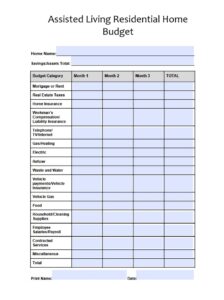
Next, carefully project the expenses based on the information gathered from facilities and the individual’s assessed needs. Be sure to include the base monthly rate, estimated personal care services, medication management, and any other “extras” that are necessary or desired. Do not forget to set aside a small allowance for personal spending, like haircuts, hobbies, or occasional outings. Having a detailed template helps you visualize where every dollar is going and identify any potential shortfalls or areas where adjustments might be needed.
- Gather all income statements and financial assets.
- Research at least three local assisted living facilities for their pricing structures.
- Estimate all potential monthly expenses, including personal care and incidentals.
- Factor in potential increases in care needs over time.
- Utilize a spreadsheet or dedicated budgeting app to organize everything clearly.
Taking the time to meticulously plan and organize your finances for assisted living can make a significant difference in the journey ahead. It transforms a daunting prospect into a manageable series of steps, providing clarity and confidence.
With a well-structured budget in hand, families can approach facility tours and discussions with greater assurance, knowing exactly what they can afford and what questions to ask. This proactive financial management empowers everyone involved to make choices that truly align with care needs and financial realities, ensuring a comfortable and secure future.