Consistent progress in the gym often feels like a puzzle, especially when you’re pushing your physical limits week after week. Many dedicated lifters reach plateaus, struggle to recall their previous performance, or find it hard to see the tangible results of their hard work. Without a clear record, it’s easy to lose track of what’s working and what isn’t, making it challenging to implement the progressive overload essential for growth.
This is where a well-designed weekly strength training log template becomes an indispensable tool. It provides a structured way to document your workouts, helping you understand your progress, identify patterns, and make informed decisions about your training. Whether you’re a beginner learning the ropes or an advanced athlete aiming for a new personal best, logging your sessions can significantly accelerate your journey toward your fitness goals.
In this comprehensive guide, we’ll explore why tracking your workouts is so vital, what key elements make an effective log, and provide a practical weekly strength training log template you can start using today. Get ready to transform your training approach from guesswork to data-driven success.
Why Tracking Your Strength Workouts Matters for Progress
Logging your strength training sessions is far more than just writing down numbers; it’s about creating a historical record of your efforts. This record offers invaluable insights into your performance trends, helping you avoid common pitfalls and continuously challenge your body in new ways. Athletes who consistently track their training often report higher adherence and faster progression.
Overcoming Plateaus and Maximizing Gains
Plateaus are a common frustration in strength training, where your progress seems to halt despite consistent effort. A detailed workout log allows you to look back at past sessions and pinpoint exactly when and where your progress stalled. You can then analyze variables like volume, intensity, and rest periods to make targeted adjustments.
By reviewing your data, you might notice that increasing reps with the same weight or adding a set often led to new strength gains. This information empowers you to make strategic changes to your routine, such as implementing deload weeks or varying exercise selection, ensuring you consistently apply progressive overload – the key principle for muscle and strength development. Logging helps you move beyond random guesswork.
Achieving Specific Strength and Muscle Goals
Setting clear goals, whether it’s lifting a certain weight, performing more repetitions, or building specific muscle groups, becomes much more manageable with a tracking system. Your weekly strength training log template serves as a roadmap, showing you precisely where you are in relation to your objectives. This visual feedback is incredibly motivating.
For instance, if your goal is to bench press 225 lbs, your log will show you every step, from your current max to the incremental increases you’ve made. This concrete evidence of progress reinforces positive habits and keeps you focused. It transforms abstract aspirations into achievable, data-backed milestones.
Injury Prevention and Recovery Insight
Beyond just lifting heavier, a strength training log can play a critical role in injury prevention and optimizing recovery. By noting how you felt during a workout, any aches or pains, and your perceived exertion (RPE), you gather crucial information about your body’s response to training. Over time, you might notice patterns linking certain exercises or training volumes to discomfort.
This awareness allows you to adjust your routine proactively, perhaps by reducing intensity, substituting an exercise, or taking extra rest days, before a minor ache escalates into a full-blown injury. It’s like having an early warning system built into your training. Understanding your recovery needs becomes clearer, promoting a more sustainable and healthy fitness journey.
Key Elements of an Effective Weekly Strength Training Log Template
To make your workout tracking truly effective, your template needs to capture specific, actionable data. It’s not just about what exercises you do, but how you perform them, how your body responds, and how you plan to progress. A comprehensive log helps you learn from every single session.
Essential Data Points for Tracking Progress
When designing or choosing your weekly strength training log template, prioritize the following core metrics. These details provide a clear picture of your performance and are vital for informed decision-making. Consistency in logging these points ensures reliable data.
Here are the essential data points to include:
- Date: When the workout took place.
- Exercise: The specific movement performed (e.g., Barbell Squat, Dumbbell Row).
- Weight/Resistance: The load used for each set.
- Sets: The number of working sets for each exercise.
- Reps: The number of repetitions completed for each set.
- Rest Period: How long you rested between sets (optional but useful).
- RPE (Rate of Perceived Exertion): A subjective rating of how hard the set felt (1-10 scale, 10 being max effort).
- Notes: Any specific observations, form cues, or feelings during the exercise (e.g., “left knee felt tight,” “grip gave out,” “felt strong today”).
Including these elements will give you a robust record to analyze and build upon.
Structuring Your Log for Clarity and Usability
The layout of your weekly strength training log template is just as important as the data it collects. A well-organized structure makes it easy to read, enter information quickly, and review past workouts efficiently. Think about how you’ll use it most often.
Consider structuring your template with daily entries, clearly separated. Within each day, list exercises with their respective sets, reps, and weights. A clean, column-based format usually works best for at-a-glance comparisons. Leaving space for notes at the end of each exercise or workout is also highly beneficial for capturing qualitative insights.
Sample Weekly Strength Training Log Template for Your Workouts
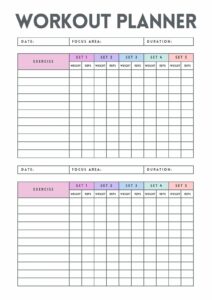
Below is a practical example of a weekly strength training log template. This format is designed to be straightforward yet comprehensive, allowing you to easily track your progress throughout your training week. You can adapt this structure for a digital spreadsheet or print it out for a physical logbook.
The template focuses on capturing the key metrics discussed earlier, providing dedicated sections for each day of your training week. This helps you maintain consistency and review your performance at a glance. Remember to fill this out immediately after each set or exercise to ensure accuracy.
Here’s a basic structure for your weekly strength training log template:
| Date | Workout Day | Exercise | Set 1 (Wt x Reps) | Set 2 (Wt x Reps) | Set 3 (Wt x Reps) | Set 4 (Wt x Reps) | RPE | Notes |
|---|---|---|---|---|---|---|---|---|
| MM/DD | Monday: Push Day | Barbell Bench Press | 135×5 | 135×5 | 135×5 | – | 7 | Good depth, felt strong. |
| Incline Dumbbell Press | 60×8 | 60×8 | 60×8 | – | 8 | Slight shoulder fatigue on last set. | ||
| Overhead Triceps Ext. | 40×10 | 40×10 | 40×10 | – | 7 | |||
| MM/DD | Tuesday: Pull Day | Deadlift | 225×3 | 225×3 | 225×3 | – | 8 | Form felt solid, focused on bracing. |
| Pull-ups | BWx6 | BWx6 | BWx5 | – | 9 | Lost a rep on last set. | ||
| Barbell Rows | 115×8 | 115×8 | 115×8 | – | 7 | |||
| MM/DD | Thursday: Leg Day | Barbell Squat | 185×5 | 185×5 | 185×5 | – | 7 | Good depth. |
| Leg Press | 270×10 | 270×10 | 270×10 | – | 8 | Felt strong. | ||
| Calf Raises | 100×15 | 100×15 | 100×15 | – | 7 | |||
| MM/DD | Saturday: Full Body | Overhead Press | 85×5 | 85×5 | 85×5 | – | 7 | |
| Goblet Squat | 50×10 | 50×10 | 50×10 | – | 6 | |||
| Romanian Deadlift | 95×8 | 95×8 | 95×8 | – | 7 | Good hamstring stretch. |
This weekly strength training log template offers a structured way to record your progress. You can easily see how much weight you lifted for how many reps across different sets and exercises. This consistency is crucial for effective progression and identifying areas for improvement or adjustment in your programming. Remember, the more detailed and consistent you are, the more powerful your log becomes.
Embracing a systematic approach to tracking your workouts is a game-changer for anyone serious about their strength and fitness journey. A well-maintained weekly strength training log template removes the guesswork, providing concrete data that fuels informed decisions and consistent progress. It transforms every session into a learning opportunity, helping you understand your body better and optimize your training strategy for long-term success.
Start implementing a logging system today, whether it’s with a simple notebook, a dedicated app, or by adapting the template provided. The small effort of documenting your workouts will yield significant returns in your strength, muscle growth, and overall fitness journey. Take control of your progress and build the physique and strength you desire, one logged workout at a time.