Maintaining food safety is paramount in any food service operation, from bustling restaurants to school cafeterias and catering businesses. One of the most critical aspects of preventing foodborne illnesses is ensuring hot foods are held at safe temperatures. This meticulous practice helps inhibit the growth of harmful bacteria, protecting both your customers and your business’s reputation. A well-designed hot food temperature log template is an indispensable tool for achieving this vital compliance and peace of mind.
Proper temperature monitoring is not just good practice; it’s often a legal requirement enforced by health departments and food safety regulations like HACCP principles. These logs provide concrete evidence that your team is consistently adhering to safe food handling standards. Without an accurate and easy-to-use hot food temperature log template, documenting these critical control points can become an inconsistent and risky task.
Throughout this article, we will explore the importance of diligent temperature monitoring, delve into the key components of an effective log, and provide a practical hot food temperature log template you can adapt for your own operations. By understanding and implementing these guidelines, you can significantly enhance your food safety management system.
Understanding Hot Holding Temperatures for Food Safety
Maintaining food at correct hot holding temperatures is a cornerstone of food safety management. When cooked food cools down to unsafe temperatures, bacteria can multiply rapidly, entering what is known as the “temperature danger zone.” This zone, typically between 41°F (5°C) and 135°F (57°C), is where pathogens thrive, making food unsafe to eat.
To prevent this, hot foods must be held at or above 135°F (57°C) at all times after cooking and prior to serving. This critical temperature acts as a preventative control, ensuring that any bacteria present cannot grow to dangerous levels. Regular monitoring and documentation are essential to verify that these standards are consistently met within your food service operation.
The Importance of Consistent Temperature Monitoring
Consistent temperature monitoring is more than just a regulatory checkbox; it’s a proactive measure against foodborne illness outbreaks. Every time food is held, it presents an opportunity for temperature fluctuations, which can compromise its safety. Regular checks, performed by trained staff, mitigate this risk by identifying deviations quickly.
These checks allow for immediate corrective actions, such as reheating food to a safe temperature or discarding it if it has been in the danger zone for too long. Documenting these checks on a hot food temperature log provides an invaluable audit trail. This record demonstrates due diligence to health inspectors and helps in identifying patterns or areas needing further staff training.
Compliance with Food Safety Regulations
Adhering to food safety regulations is non-negotiable for any establishment serving food. Agencies like the FDA, USDA, and local health departments set strict guidelines for hot holding temperatures. Non-compliance can lead to hefty fines, temporary closures, or even permanent loss of business licenses.
A properly filled-out temperature log serves as official documentation of your adherence to these standards. During an inspection, health officers will review these records to assess your establishment’s commitment to food safety. Implementing a robust record-keeping system, utilizing a hot food temperature log template, ensures you are always prepared for these critical evaluations.
Key Components of an Effective Temperature Log
An effective temperature log needs to capture all essential information to ensure comprehensive food safety record-keeping. It should be intuitive for staff to use, yet detailed enough to satisfy regulatory requirements. The design of your hot food temperature log template plays a crucial role in its efficacy.
Beyond just recording the temperature, a good log will include details about who performed the check and what actions were taken if a deviation occurred. This holistic approach to documentation ensures accountability and transparency within your food safety program. Properly structured, your log becomes a vital part of your overall HACCP plan.
Essential Fields for Your Log Sheet
A comprehensive hot food temperature log template should include several key data points. These fields help ensure that all critical information is captured consistently for every temperature check. Missing even one piece of information can compromise the integrity of your food safety records.
Consider the following essential fields when creating or selecting your temperature log:
- Date: The specific calendar date the check was performed.
- Time: The precise time of the temperature reading (e.g., AM/PM or 24-hour format).
- Food Item: Clear identification of the food being measured (e.g., “Chicken Alfredo,” “Marinara Sauce,” “Green Bean Casserole”).
- Location/Unit: Where the food is being held (e.g., “Steam Table 1,” “Hot Holding Cabinet,” “Serving Line B”).
- Recorded Temperature: The actual temperature reading in degrees Fahrenheit (°F) or Celsius (°C).
- Corrective Action Taken: If the temperature is out of range, what steps were taken (e.g., “Reheated to 165°F,” “Discarded,” “Adjusted holding unit temperature”).
- Initials/Signature: The staff member who performed the check and took any necessary action.
- Supervisor Review: A space for a supervisor to sign off, indicating oversight.
Utilizing Digital vs. Paper-Based Logging
Both digital and paper-based systems have their place in temperature logging. Traditional paper logs, often derived from a hot food temperature log template, are simple to implement and require minimal initial investment. They are readily accessible and can be quickly filled out by staff on the spot.
However, digital logging solutions offer advanced features such as automated alerts for out-of-range temperatures, cloud storage for easy retrieval, and analytics for identifying trends. While they require an initial setup and investment in sensors or smart thermometers, they can significantly reduce human error and streamline compliance reporting. Many businesses choose a hybrid approach, using paper logs for immediate checks and digitizing the data later.
Sample Hot Food Temperature Log Template
Implementing a standardized hot food temperature log template across your operations is crucial for consistency. Below is a detailed example of a template that incorporates all the essential fields discussed, designed for easy understanding and use by food service staff. This format ensures that every critical piece of information is recorded, providing a clear and traceable record of your food safety practices.
This sample structure is designed to be adaptable. You can modify it to include specific food items, holding units, or additional compliance notes relevant to your local regulations. The goal is to create a functional document that reinforces safe holding practices daily.
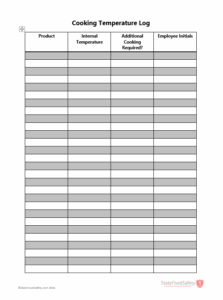
Here is a sample hot food temperature log template:
| Date | Time | Food Item (Specific) | Holding Unit/Location | Recorded Temp (°F) | Action Taken (If <135°F) | Staff Initials | Supervisor Review |
|---|---|---|---|---|---|---|---|
| MM/DD/YYYY | HH:MM AM/PM | Chicken Curry | Steam Table A | 155 | None – Temp Good | JS | |
| MM/DD/YYYY | HH:MM AM/PM | Mac & Cheese | Hot Holding Cabinet 2 | 132 | Reheated to 165°F | MS | |
| MM/DD/YYYY | HH:MM AM/PM | Vegetable Soup | Soup Warmer 1 | 148 | None – Temp Good | AB | |
| MM/DD/YYYY | HH:MM AM/PM | Beef Chili | Steam Table B | 130 | Discarded (held >4 hrs <135°F) | MS | |
| MM/DD/YYYY | HH:MM AM/PM | Mashed Potatoes | Hot Holding Cabinet 1 | 140 | None – Temp Good | JS |
This hot food temperature log template serves as a robust framework for daily food safety checks. Remember to include space for multiple entries throughout the day, as hot holding temperatures should be checked at regular intervals, typically every two to four hours, depending on local regulations and HACCP plan specifics.
Consistent training for all food handlers on how to properly use a thermometer and accurately complete this log is essential for its effectiveness. Encourage staff to ask questions and foster a culture where food safety is everyone’s responsibility.
Implementing a reliable hot food temperature log template is a fundamental step towards a comprehensive food safety program. Consistent temperature monitoring and meticulous record-keeping are your best defense against foodborne illnesses and regulatory violations. By utilizing a clear, easy-to-use log, you empower your team to maintain optimal hot holding temperatures, ensuring every dish served is safe and delicious.
Take the proactive step today to review your current temperature monitoring practices. Download, customize, and implement a robust hot food temperature log template to safeguard your customers and uphold the highest standards of food safety in your establishment. Your commitment to these practices builds trust and ensures long-term success.