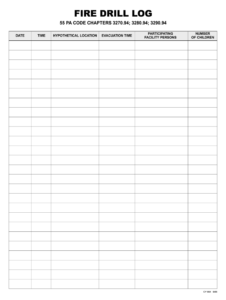
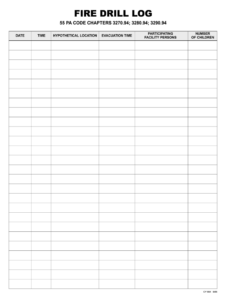
Every fire department understands that continuous training is the bedrock of operational readiness and firefighter safety. Keeping meticulous records of this training is not just good practice; it’s a critical component for departmental accountability and individual skill development. This is precisely where a well-designed fire department training log template becomes indispensable, providing a structured way to document essential learning.  An effective training log ensures that every drill, lecture, and practical exercise is formally recorded, tracked, and easily accessible. In this comprehensive guide, we’ll explore the critical components of such a template, discuss its profound benefits, and provide a practical sample to help your department streamline its training documentation process.
Optimizing Firefighter Readiness with a Training Activity Log
Maintaining a high level of preparedness is paramount for any fire department, and this directly hinges on robust and consistent training. A dedicated firefighter training tracker allows departments to monitor individual and team progress, ensuring all personnel meet required certifications and skill proficiencies. This systematic approach supports continuous improvement and helps identify areas needing further development.
Utilizing a standardized fire department training log template offers numerous advantages beyond simple record-keeping. It provides objective data for performance reviews, assists in compliance with regulatory bodies like OSHA or NFPA, and serves as invaluable evidence in case of an incident investigation.
Furthermore, it fosters a culture of professional growth, as firefighters can clearly see their own learning journey. Beyond compliance and tracking, these logs are vital for operational planning. They highlight skill gaps across shifts or specialties, allowing command staff to tailor future training sessions precisely where they are needed most. This proactive approach ensures that resources are allocated efficiently, maximizing the impact of every training dollar.
An ideal training log should capture several key pieces of information to be truly effective. It needs to be comprehensive yet easy to complete, ensuring minimal disruption to training schedules. Simplicity in design encourages consistent use across all shifts and personnel, promoting uniformity in documentation. Here are the essential elements typically found in a robust firefighter training log:
- Date of Training: When the training session occurred, crucial for chronological record-keeping.
- Training Topic/Subject: A clear, concise description of the drill or lesson conducted.
- Duration: The total time spent on the training, often broken down into classroom and practical hours.
- Instructor/Facilitator: Who led the training, along with their qualifications if relevant.
- Participants: A list of all firefighters who attended, ensuring individual accountability.
- Training Objectives Met: Specific goals or competencies achieved during the session.
- Key Takeaways/Observations: Important notes, challenges encountered, or learning points for future reference.
- Skills Practiced: Any practical skills honed or demonstrated, with a note on proficiency levels.
- Signatures: Verification by participants and the instructor, confirming attendance and completion.
- Location: Where the training took place, whether in-station, at a training ground, or off-site.
To illustrate how these elements come together, consider the following sample of a fire department training log template. This format provides a clear, structured way to document every training activity, making record retrieval and analysis straightforward for administrative staff and command officers alike.
| Date | Training Topic | Duration (Hours) | Instructor | Participants | Objectives Met | Skills Practiced | Instructor Signature |
|---|---|---|---|---|---|---|---|
| 2023-10-26 | SCBA Donning & Doffing Drill | 1.5 | Capt. J. Smith | FF A. Jones, FF B. Lee, FF C. Davis | Proper SCBA setup, air management | Rapid deployment, buddy breathing checks | J. Smith |
| 2023-10-27 | Vehicle Extrication Review | 3.0 | Lt. M. Brown | FF D. Green, FF E. White | Hydraulic tool operation, patient access | Stabilization techniques, cutting paths | M. Brown |
| 2023-10-28 | Hazardous Materials Awareness | 2.0 | Div. Chief R. Adams | All Shift A Personnel | ERGs, identifying placards | Initial assessment, scene safety perimeter | R. Adams |
Customizing this fire department training log template to fit your specific departmental needs and local regulations is highly recommended. You might add fields for CEUs, specific equipment used, or even a section for peer feedback. A flexible template ensures long-term applicability. In summary, implementing a well-structured training documentation system is fundamental for any modern fire department dedicated to excellence and safety.
A comprehensive fire department training log template provides the framework for tracking vital skills, ensuring regulatory compliance, and fostering continuous professional development among personnel. It’s a tool that empowers departments to maintain peak readiness and uphold their commitment to community service. By adopting a consistent approach to logging all training activities, your department can gain invaluable insights into its operational strengths and areas for improvement.
Consider downloading or customizing a training log template today to enhance your documentation processes and elevate your team’s preparedness to the next level.