In the high-stakes world of emergency services, every second counts, and every incident demands meticulous documentation. Without accurate records, accountability suffers, future responses can be less effective, and critical insights into operational efficiency are lost. This is where a robust and well-structured documentation system becomes invaluable for any fire department.
An effective fire department call log template is more than just a piece of paper; it’s a vital tool for capturing real-time data from every dispatch and incident. It ensures that crucial details—from initial call to scene departure—are recorded consistently, providing a clear historical record for analysis, training, and legal compliance. Throughout this article, we’ll explore the essential elements of such a template, demonstrate its practical application, and show how it can significantly enhance your department’s operational effectiveness.
Essential Components of an Emergency Incident Log
Maintaining comprehensive records for every emergency incident is not merely a bureaucratic task; it’s fundamental to a fire department’s success and continuous improvement. Detailed incident logs provide a backbone for operational review, personnel training, and legal protection. Without a standardized approach, vital information can be missed or inconsistently recorded, leading to gaps in knowledge and potential liabilities.
A well-designed fire department call log template acts as a standardized framework, ensuring that all necessary data points are consistently captured. This consistency is crucial for tracking trends, evaluating response times, and identifying areas for process improvement. From initial dispatch details to the final status of an incident, every piece of information contributes to a complete operational picture.
Here are the key data fields typically found in an effective emergency incident reporting system:
- Incident ID/Case Number: A unique identifier for each distinct event.
- Date and Time of Call: When the emergency call was received.
- Time of Dispatch: When units were sent to the scene.
- Time of Arrival: When the first unit reached the incident location.
- Time of Clearance: When units were released from the scene.
- Incident Type: Classification of the emergency (e.g., structure fire, medical assist, false alarm, MVA).
- Location: Full address or specific coordinates of the incident.
- Reporting Party Information: Name and contact details of the caller (if available).
- Units Dispatched: Which apparatus and personnel responded.
- Personnel On Scene: List of firefighters and officers present.
- Incident Commander: Name of the officer in charge.
- Initial Assessment/Observations: First details noted upon arrival.
- Actions Taken: Specific tasks performed by the department.
- Outcome/Disposition: Resolution of the incident.
- Injuries/Fatalities: Details for civilians and personnel.
- Property Loss Estimate: Preliminary estimate of damage.
- Notes/Remarks: Any additional pertinent information or unusual circumstances.
- Recorded By: Name/ID of the person filling out the log.
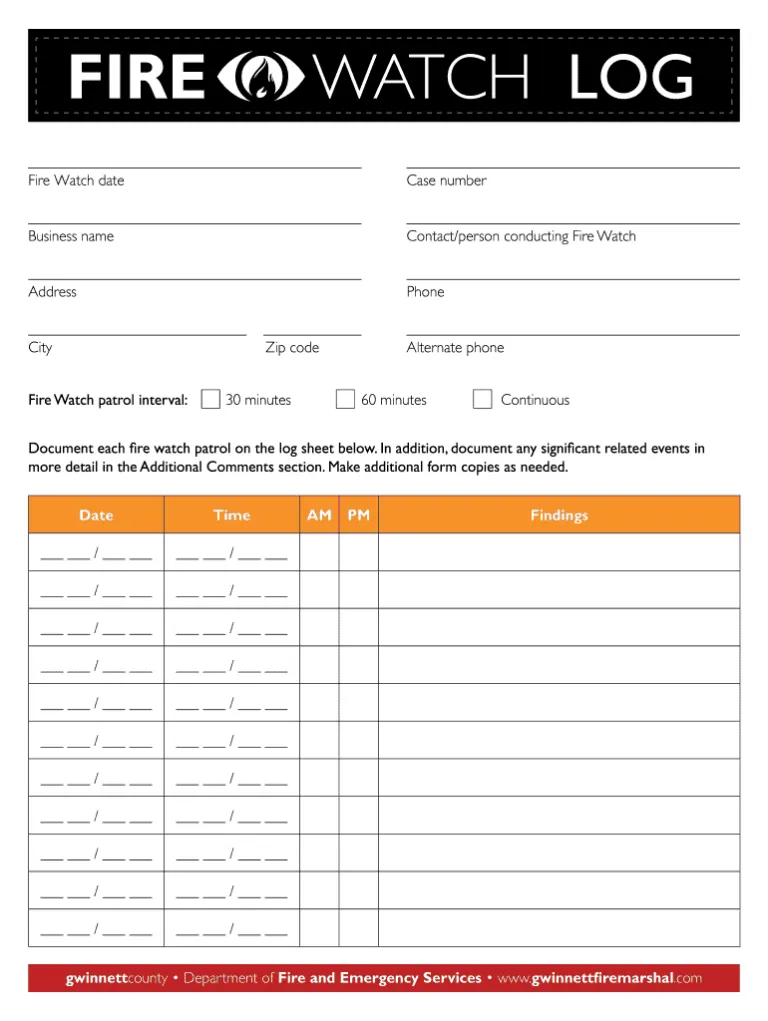
To illustrate how these components come together, consider the following sample structure for a printable fire department call log template:
| Field | Details |
|---|---|
| Incident ID: | [Unique Number] |
| Date: | [MM/DD/YYYY] |
| Call Time: | [HH:MM] |
| Dispatch Time: | [HH:MM] |
| Arrival Time: | [HH:MM] |
| Clear Time: | [HH:MM] |
| Incident Type: | [e.g., Structure Fire, MVA, Medical] |
| Location: | [Street Address, City, State, Zip] |
| Units Dispatched: | [Engine 1, Ladder 2, Medic 3] |
| Incident Commander: | [Officer’s Name] |
| Summary of Incident: | [Brief description of the event and actions taken] |
| Outcome: | [e.g., Fire Extinguished, Patient Transported, False Alarm] |
| Injuries (Civilian/Personnel): | [Number, Type] |
| Recorded By: | [Name/Badge Number] |
Utilizing a structured template like this helps ensure that no critical information is overlooked during the chaos of an emergency response. It not only streamlines the documentation process but also provides a consistent format that is easy to understand and analyze later. This systematic approach is key to operational excellence and robust record-keeping for every emergency service provider.
Accurate and consistent documentation is the bedrock of an efficient and accountable fire department. By adopting a well-designed fire department call log template, agencies can transform raw incident data into actionable insights, improve response protocols, and ensure transparency in all operations. These templates empower departments to maintain high standards of service and safeguard their communities more effectively.
Investing time in selecting or customizing the right call log template can yield significant benefits, enhancing everything from post-incident analysis to long-term strategic planning. Consider how your current system measures up and explore how a more formalized approach to incident logging can elevate your department’s readiness and performance.