Managing company vehicles and their associated expenses can be a complex task for any business, regardless of its size. Accurate mileage tracking is not just a good practice; it’s a fundamental requirement for maximizing tax deductions, ensuring IRS compliance, and efficiently managing your operational costs. Without a clear system, businesses risk overlooking significant savings and facing potential auditing challenges. This article will guide you through the importance of diligent mileage logging, detail the essential components of an effective company vehicle mileage log template, and provide a practical example to help you streamline your record-keeping.
A well-structured company vehicle mileage log template simplifies the process of recording every business trip. It transforms what could be a tedious chore into a straightforward routine, ensuring that all necessary information is captured consistently. From daily commutes to client meetings and supply runs, every mile driven for business purposes has financial implications that a proper log can help you leverage.
By the end of this comprehensive guide, you will understand the critical benefits of precise mileage tracking, know exactly what data points to include in your logs, and be equipped with the knowledge to implement an efficient system within your organization. We will explore various aspects to help you maintain impeccable records for your fleet or individual company vehicles.
Why Accurate Mileage Tracking is Crucial for Businesses
Every mile driven for business purposes holds financial value. Keeping precise records is more than just good bookkeeping; it’s a strategic move that directly impacts your company’s bottom line and its relationship with tax authorities. Neglecting accurate mileage tracking can lead to missed opportunities for savings and significant compliance risks.
Maximizing Tax Deductions and Reimbursements
One of the primary reasons to maintain a detailed vehicle logbook is to capitalize on tax deductions. The IRS allows businesses to deduct the costs of operating a vehicle for business purposes, either through actual expenses or by using the standard mileage rate. A robust company vehicle mileage log template ensures you have the verifiable data needed to claim these deductions accurately. This helps to reduce your taxable income.
Beyond tax deductions, diligent mileage tracking is essential for fair and accurate employee reimbursement. If employees use their personal vehicles for company business, a clear system for logging miles ensures they are promptly and correctly compensated for their expenses. This fosters employee satisfaction and maintains transparency in financial dealings. Consistent record-keeping eliminates disputes over mileage claims.
Ensuring IRS Compliance and Avoiding Audits
The Internal Revenue Service (IRS) is very specific about the documentation required to substantiate business mileage deductions. In the event of an audit, incomplete or poorly kept records can result in disallowed deductions, penalties, and interest. A comprehensive mileage log provides an indisputable paper trail, demonstrating your adherence to tax regulations.
The IRS typically requires logs to include the date of the trip, the starting and ending odometer readings, the total miles driven, the destination, and the specific business purpose. Without these details, your claims might be challenged. Implementing a standardized company vehicle mileage log template across your organization helps ensure that all employees capture the required information consistently, reducing audit risk.
Streamlining Fleet Management and Operations
Beyond the immediate financial benefits, accurate mileage data offers valuable insights for fleet management. By tracking vehicle usage, businesses can make informed decisions about maintenance schedules, fuel efficiency, and vehicle allocation. Identifying high-usage vehicles allows for proactive servicing, potentially extending vehicle lifespans and reducing unexpected breakdowns.
Furthermore, detailed mileage logs can help analyze operational efficiency. You can pinpoint inefficient routes, identify opportunities for route optimization, and even assess the overall utilization of your company vehicles. This data supports better budgeting for vehicle-related expenses and contributes to more sustainable business practices.
Essential Elements of an Effective Company Vehicle Mileage Log Template
Creating a mileage log that truly serves your business needs requires understanding what information is critical to capture. An effective company vehicle mileage log template isn’t just about recording miles; it’s about building a comprehensive record that stands up to scrutiny and provides actionable insights.
Key Data Points to Include
To be fully compliant and useful, your mileage log must capture specific details for each trip. Each entry should tell a complete story of the journey. Here are the essential data points that every robust mileage log should incorporate:
- Date of Trip: The exact day the business journey occurred.
- Starting Odometer Reading: The odometer reading at the beginning of the trip.
- Ending Odometer Reading: The odometer reading at the end of the trip.
- Total Miles Driven: The difference between the starting and ending odometer readings.
- Destination: The specific location or locations visited during the trip.
- Business Purpose: A clear and concise explanation of why the trip was necessary for business (e.g., “Client meeting with [Client Name],” “Delivery to warehouse,” “Conference attendance”).
- Driver Name (if applicable): Essential for multi-driver vehicles or employee reimbursement.
- Vehicle Identification: Make, model, and license plate number of the vehicle used.
Including these details ensures that your records are thorough and verifiable, meeting the stringent requirements set by tax authorities. A well-designed company vehicle mileage log template will have dedicated fields for all of this information, making it easy to complete.
Choosing Between Digital and Printable Formats
The format of your mileage log can significantly impact its ease of use and accuracy. Businesses today have excellent options ranging from traditional paper logs to advanced digital solutions. Each format offers distinct advantages, depending on your company’s size, budget, and operational preferences.
Printable templates are simple to distribute and can be filled out manually in the vehicle. They are often cost-effective and don’t require any special technology. However, paper logs can be prone to loss, damage, or legibility issues, and compiling data from multiple paper forms can be time-consuming.
Digital mileage log solutions, such as mobile apps, GPS trackers, or spreadsheet templates, offer greater accuracy and convenience. They can automate parts of the logging process, store data securely in the cloud, and generate reports instantly. While some digital tools involve a subscription cost, the efficiency gains and reduced risk of errors often outweigh the expense, especially for larger fleets or remote teams. Many businesses find that a digital company vehicle mileage log template within a spreadsheet is a good starting point.
Best Practices for Consistent Mileage Logging
Maintaining consistent and accurate mileage records requires discipline and clear guidelines for employees. Simply providing a template isn’t enough; you need to establish a culture of diligent record-keeping. Encourage employees to log their mileage daily, or immediately after each trip, rather than trying to reconstruct details later. This reduces the likelihood of errors or forgotten trips.
Regularly review submitted mileage logs to ensure completeness and accuracy. Providing brief training sessions on how to properly use the company vehicle mileage log template can prevent common mistakes. Emphasize the importance of accurate odometer readings and detailed business purposes, explaining how these directly impact tax deductions and reimbursements. Clear communication about company policies for vehicle use and mileage reporting is paramount for success.
Sample Company Vehicle Mileage Log Template
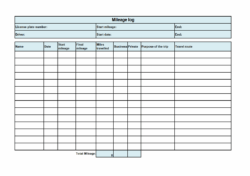
A practical example often clarifies the best way to implement a new system. This sample company vehicle mileage log template provides a structured format that captures all the essential information we’ve discussed. It is designed to be straightforward and easily adaptable for various business needs, whether you prefer a printable version or a simple digital spreadsheet.
This template helps ensure that every critical piece of information for each business trip is systematically recorded. Filling out a log like this consistently will provide a clear and verifiable record for tax purposes, expense reports, and operational analysis.
| Date | Driver Name | Vehicle ID | Start Odometer | End Odometer | Total Miles | Destination | Business Purpose |
|---|---|---|---|---|---|---|---|
| MM/DD/YYYY | John Doe | ABC-123 | 123,456 | 123,489 | 33 | Client Office – Main St. | Client meeting with Acme Corp. |
| MM/DD/YYYY | Jane Smith | XYZ-789 | 45,010 | 45,035 | 25 | Warehouse – Industrial Park | Pickup inventory for Q3 sales. |
| MM/DD/YYYY | |||||||
| MM/DD/YYYY |
When using this company vehicle mileage log template, encourage drivers to fill it out immediately after each trip. The “Vehicle ID” could be a license plate number, a fleet number, or simply the vehicle’s make and model. The “Business Purpose” field is crucial for justifying the expense, so ensure it is always descriptive and specific. Regular review of these logs by a supervisor or accountant can catch discrepancies early and ensure all entries are compliant.
Implementing a reliable company vehicle mileage log template is an investment in your business’s financial health and operational efficiency. From safeguarding your tax deductions to ensuring fair employee reimbursements and enhancing fleet management, the benefits are substantial. By adopting a systematic approach to mileage tracking, your company can navigate complex tax regulations with confidence and make more informed decisions about its vehicle usage.
Take the proactive step today to implement or refine your mileage logging practices. Whether you choose a simple printable form or a sophisticated digital solution, consistent and accurate record-keeping is paramount. Equip your team with the right tools and knowledge to track every business mile, ensuring your company remains compliant, efficient, and financially optimized.