Starting and running a small farm is a labor of love, but it also demands astute business sense. One of the most powerful tools in your agricultural arsenal is a well-crafted small farm enterprise budget template. This isn’t just about crunching numbers; it’s about gaining clarity, making informed decisions, and ultimately, steering your farm towards profitability and sustainability. It helps you understand exactly where your money is going and where it’s coming from, breaking down the complex financial picture of your entire operation into manageable pieces.
Without a clear financial roadmap, it’s easy to feel overwhelmed by the myriad of expenses and the often-unpredictable nature of farming. A robust budget template provides that roadmap, allowing you to anticipate costs, project revenues, and evaluate the financial viability of each distinct enterprise on your farm, whether that’s a specific crop, a livestock venture, or even a value-added product line. It’s the difference between guessing your way through the season and strategically planning for success.
This article will guide you through the intricacies of enterprise budgeting for small farms. We’ll explore why these templates are indispensable, what components they should include, and how you can effectively use them to empower your farm’s financial future. From understanding your income streams to meticulously tracking every expense, you’ll discover how this single tool can transform your approach to farm management.
Understanding the Core of Your Farm’s Finances
An enterprise budget is essentially a detailed financial plan for a single production unit or “enterprise” within your farm. Think of your farm as having several distinct businesses operating under one roof: your tomato production is one enterprise, your pastured poultry another, and perhaps your seasonal cut flower operation yet another. Each of these enterprises has its own unique set of income and expenses, and an enterprise budget template helps you isolate and analyze them individually. This granular view is crucial because it allows you to see which parts of your farm are thriving and which might be struggling, providing the data needed to make critical adjustments.
For small farms, this level of detail isn’t just helpful; it’s often essential for survival. Unlike larger agricultural operations that might absorb minor losses in one area with profits from another, small farms typically operate on tighter margins. Every dollar counts, and understanding the profitability of each specific crop or animal system allows you to allocate your limited resources – land, labor, capital – to their most productive uses. It helps prevent a situation where a seemingly busy and productive enterprise is actually costing you money without you even realizing it.
Deconstructing Your Income Streams
The first major component of any enterprise budget is revenue. This section outlines all the money you expect to generate from a particular enterprise. It involves projecting your yield or output (e.g., pounds of tomatoes, number of chickens, dozens of eggs) and estimating your selling price per unit. Consider all potential sales channels, whether direct-to-consumer through farmers markets or CSAs, wholesale to restaurants, or online sales. Don’t forget any potential grants, cost-share programs, or other subsidies directly tied to that specific enterprise. Accuracy here is key, as overestimating revenue can lead to overly optimistic (and potentially damaging) financial projections.
Tackling Expenses: Variable vs. Fixed Costs
Next, you dive into the expenses, which are typically broken down into two critical categories: variable costs and fixed costs. Variable costs are those that change directly with the level of production. For a vegetable enterprise, this includes seeds, fertilizer, pest control, irrigation water, packaging materials, and the labor directly involved in planting, tending, and harvesting that specific crop. For livestock, it would be feed, veterinary supplies, and bedding. These costs increase as you produce more and decrease as you produce less.
Fixed costs, on the other hand, do not change significantly with the level of production within a relevant range. These are the overheads that you incur regardless of how much you plant or how many animals you raise. Examples include property taxes, insurance premiums, depreciation on equipment (tractors, tillers, irrigation systems), land rent or mortgage payments, and administrative salaries that aren’t tied directly to a specific crop’s output. While some fixed costs might be shared across multiple enterprises, it’s important to allocate a reasonable portion to each enterprise to get a true picture of its financial contribution. Understanding the distinction between variable and fixed costs is paramount for making sound operational decisions, especially when considering expanding or reducing production.
Practical Steps to Implement Your Budget
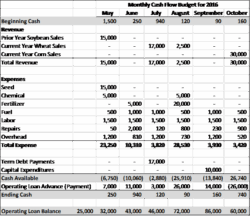
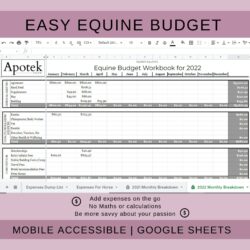
Once you grasp the components, the next step is to actually put your small farm enterprise budget template to use. You can find numerous free templates online from agricultural extension offices, university programs, or farm management software companies, often tailored to specific regions or types of agriculture. Alternatively, a simple spreadsheet program like Excel or Google Sheets can serve as a powerful tool for building your own customizable template. The key is to choose a format that you find intuitive and easy to update.
The process involves diligent data collection. This means tracking every purchase, every hour of labor, and every sale that pertains to each enterprise. Initially, this might feel like a chore, but consistent record-keeping is the bedrock of accurate budgeting. Once you have your data, you input it into your template, allowing you to calculate key metrics like gross margin per enterprise, net returns, and break-even points. Don’t just set it and forget it; review your budget regularly, ideally monthly or quarterly, to compare actual performance against your projections. This allows you to identify discrepancies, understand why they occurred, and make necessary adjustments to your farming practices or marketing strategies.
Beyond mere financial tracking, a well-maintained enterprise budget template provides invaluable insights that drive strategic decisions. It helps you identify which enterprises are truly profitable and which might be drains on your resources, allowing you to optimize your crop rotation, livestock numbers, or product mix. It also supports expansion plans by providing a clear financial picture for new ventures. For instance, if you’re considering adding a new type of crop, you can develop a separate enterprise budget for it to project its potential profitability before investing significant resources. Furthermore, it serves as a powerful tool for securing financing, as lenders appreciate seeing a clear, data-driven financial plan for your farm.
By consistently utilizing a small farm enterprise budget template, you transform your farm from a passion project into a truly data-driven business. It provides the clarity and foresight needed to navigate the challenges of agriculture, making informed decisions that bolster your farm’s financial health and long-term viability. This proactive approach to financial management ensures that your hard work translates into sustainable growth and greater peace of mind.