Operating forklifts safely and efficiently is paramount for any business involved in material handling. These powerful machines are the backbone of many warehouses, factories, and construction sites, but their constant use means they require diligent care. Neglecting routine checks can lead to costly breakdowns, reduced productivity, and, most critically, dangerous accidents. This is precisely why having a robust **forklift daily maintenance log template** is not just a good idea, but an essential part of your operational strategy. 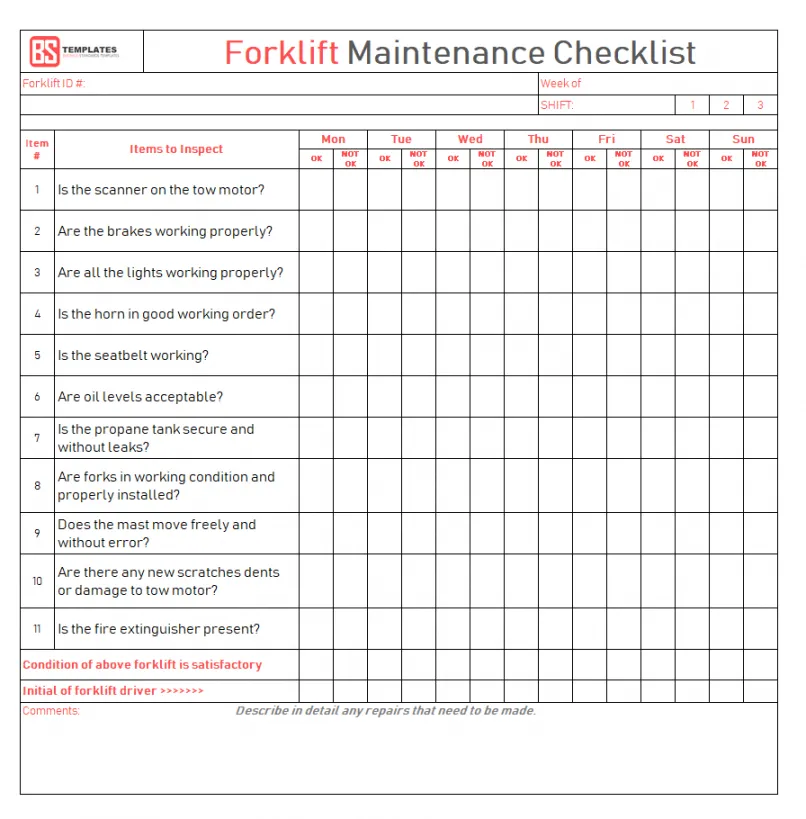
Throughout this article, we will explore the critical reasons behind implementing a daily maintenance log, delve into what makes an effective template, and provide a comprehensive example to help you safeguard your equipment and your team. Understanding how to properly document these routine checks ensures your forklifts remain reliable, compliant, and ready for whatever the workday brings.
Why a Daily Forklift Inspection Checklist is Essential for Safety and Compliance
Implementing a daily forklift inspection checklist, often facilitated by a detailed **forklift daily maintenance log template**, serves multiple crucial purposes. Firstly, it acts as a proactive measure against unexpected equipment failures. Catching minor issues before they escalate into major problems saves significant repair costs and prevents downtime, which directly impacts your business’s bottom line.
Beyond operational efficiency, safety is perhaps the most compelling reason. Forklift accidents can result in severe injuries or even fatalities, making regular inspections a non-negotiable part of a safe working environment. According to OSHA, thousands of forklift-related injuries occur annually, many of which could be prevented by proper maintenance and pre-shift checks. A consistent log helps identify potential hazards, protecting your operators and other personnel.
Furthermore, regulatory compliance demands thorough equipment maintenance records. Agencies like OSHA require that forklifts be inspected at least daily, or after each shift if used continuously. A well-maintained forklift daily maintenance log template provides clear, documented proof that your company is adhering to these standards, safeguarding you against potential fines and legal liabilities during audits. It demonstrates a commitment to operational excellence and worker well-being.
Creating an Effective Forklift Pre-Shift Inspection Log
A truly effective forklift pre-shift inspection log goes beyond a simple checklist; it’s a comprehensive tool designed for ease of use and thoroughness. When building or selecting your forklift daily maintenance log template, consider including categories that cover all critical operational components. This ensures nothing important is overlooked before an operator begins their shift.
The log should clearly prompt operators to check for basic functionalities and potential damage. This includes visual inspections of tires, forks, and the mast, as well as operational checks of lights, horn, brakes, and steering. Fluid levels, battery charge (for electric forklifts), and fuel levels (for internal combustion models) are also vital daily checks to prevent unexpected stoppages.
A well-designed template also allows for easy identification of issues and immediate reporting. There should be clear sections for recording the date, forklift unit number, operator’s name, and space for comments on any defects found. The ability to document the corrective action taken or report a “failed” status ensures that unsafe equipment is taken out of service promptly until repairs are made, contributing significantly to workplace safety.
Here is a sample forklift daily maintenance log template designed for clarity and comprehensive checks:
| Date | Forklift Unit # | Operator Name | Shift |
|---|---|---|---|
| MM/DD/YYYY | FL-001 | John Doe | Morning |
Daily Pre-Operation Inspection Checklist
- Tires and Wheels: Condition, inflation, damage? (Pass/Fail)
- Forks: Condition, wear, cracks? (Pass/Fail)
- Mast and Chains: Lubrication, damage, proper tension? (Pass/Fail)
- Overhead Guard: No damage, secure? (Pass/Fail)
- Lights (Headlights, Taillights, Warning Lights): Working? (Pass/Fail)
- Horn: Working? (Pass/Fail)
- Brakes (Foot and Parking): Functioning properly? (Pass/Fail)
- Steering: No excessive play, smooth operation? (Pass/Fail)
- Hydraulic Leaks: Any signs of leaks (oil, fluid)? (Pass/Fail)
- Fluid Levels (Engine oil, Transmission fluid, Hydraulic fluid, Coolant – IC models): Proper levels? (Pass/Fail)
- Battery (Electric models): Charge level, condition, connections? (Pass/Fail)
- Seatbelt: Condition, functionality? (Pass/Fail)
- Controls (Lift, Tilt, Directional): Smooth operation? (Pass/Fail)
- Gauges and Warning Indicators: Working, no warning lights? (Pass/Fail)
- Fire Extinguisher: Present, charged, secure? (Pass/Fail)
Defects Noted / Comments:
____________________________________________________________________________________________________
____________________________________________________________________________________________________
Corrective Action Taken:
____________________________________________________________________________________________________
Operator Signature: ____________________________ Supervisor Signature: ___________________________
Implementing a reliable forklift daily maintenance log template is a cornerstone of responsible equipment management and workplace safety. By consistently utilizing such a log, businesses can significantly reduce the risk of accidents, prolong the life of their valuable material handling equipment, and ensure compliance with industry regulations. It transforms routine checks into a documented commitment to safety and operational excellence.
Don’t wait for an incident to highlight the importance of proper maintenance. Adopt a comprehensive daily inspection routine for your forklifts today, empowering your operators to identify and report issues proactively. This simple yet effective practice will contribute to a safer, more efficient, and compliant work environment for everyone.